
This summer has been a busy one, and I’d be lying if I said I wasn’t disappointed by my inability to keep up with my writing goals. I’ve written bits and pieces, but it’s been really hard to finish any idea that I’ve started to get down on paper over these last few months.
I haven’t been lazy! But if I’m being honest I have been combatting a lot of shame for seemingly succumbing to the ADHD cycle of abandoned hobbies.
Truth be told, summer school took a lot of my creative brain power. While it wasn’t content intended for Jen Talks Loud, there is work I’m proud of. And pressing “publish” on this post is my way of showing up for myself. It’s a reminder that the work I have done counts, and that keeping this space alive doesn’t have to be all or nothing.
I’m also promising (to myself, and now to you) that there will be more to come soon. I want to recap the joy of the time I carved out with friends and family this summer, and I’ve got stories to share from diving headfirst into the deep end of the dating pool.
But for now, as I kick off my second semester in Georgetown’s PRCC Program, I want to share one of those grad school projects: an op-ed I wrote this summer for my PR Writing course. With Congress set to vote later this month on the future of library funding (a resource that’s in serious jeopardy) it feels like the right time to bring it here.
Libraries Aren’t Bureaucracy, They’re Community Lifelines
By Jen Peters
In 2014, I was 24 years old and managing an after-school program for Playworks Northern California. Due to a much-needed, extended teacher prep period, I kept ten fourth and fifth graders safe, engaged and learning for five straight hours every Wednesday. That’s when the Mountain View Public Library became our refuge.
We’d walk the half mile from the school to the library, playing games on the way. Once there, the kids did homework, explored books, and checked them out (which I pre-approved with parents). After our time inside the library, we played kickball on the field just outside. The library wasn’t just a place to spend an extended amount of time with my kids. It was a classroom, a change of scenery, a cooling station, and a reading sanctuary, all rolled into one.
As a DC-based strategic communications professional working with clients across the education spectrum, I found it alarming that the Trump administration issued an executive order proposing the elimination of the Institute of Museum and Library Services (IMLS), the federal agency that helps fund public libraries nationwide.
Libraries are not a burden on public resources; they are a wise investment in community well-being. They are the rare public institution that offers tangible, practical support to people from all walks of life. They have books, of course, but they also have free access to Wi-Fi, job applications, language learning tools, parenting groups, summer reading programs, and so much more. Some libraries lend tools, offer tax prep help, or even rent a fishing pole. They are one of the last truly accessible, multigenerational public spaces in American life.
The Institute of Museum and Library Services (IMLS) receives less than 0.003% of the federal government’s budget, costing approximately 75 cents per person while offering a significant return on investment. In a time when many Americans are facing economic challenges and material hardships, the last thing we should do is restrict their access to free resources. Libraries not only help individuals get by but also provide enjoyable activities that promote learning. The proposed funding cut, framed as a cost-saving measure, threatens an essential part of our civic infrastructure. To truly “make America affordable again,” policymakers should increase, not cut, library funding.
The American Library Association has been gathering stories from communities across the country to amplify the impact of potential cuts to library funding. Take the story of a small library in rural Nebraska that serves 1,000 visitors a month. It relies on a 50 percent E-rate discount to provide internet access. If that funding disappears, the library may have to slash programs and delay equipment repairs just to keep Wi-Fi online. Or consider the Barbara Bush Library in Harris County, Texas, where federal grants fund everything from inter-library loan services to Chromebooks and hotspots. If those funds dry up, so do many residents’ lifelines to education and employment.
Without IMLS support, programs like these will evaporate. Cindy Hohl, President, American Library Association, recently told NPR, “When we look to the strength of libraries, it’s always important that we look at all of the different ways that libraries provide services to people. There are many people who cannot afford Internet access in their homes. And they rely upon their local public library to be able to access Internet services, so that they can apply for jobs and benefits, so that they can even have access to telehealth appointments with their health care provider.”
Cutting library funding will not reduce waste; it will reduce opportunity. The argument that libraries are expendable is both short-sighted and tone deaf in a time where families are struggling to afford basic needs. Libraries enable entire communities to access the resources they need to thrive economically and offer a noted return on investment.
When I think back to those Wednesdays at the Mountain View library, I don’t just see a building with books that helped fill out my lesson plan. I see a community resource that gave options for the kids and me in my after-school program. I see a safe haven for kids, families, and any member of any community.
This moment demands vigilance. While the IMLS isn’t gone yet, the threat is real and is part of a broader pattern of disinvestment in public goods. Communities can’t afford to be caught on their heels. As a communications professional, my instincts tell me local leaders, policymakers and education advocates should be working now to document the value their libraries bring to their cities and states. They should be collecting stories, analyzing the economic benefit, and preparing to make the case for continued funding.
America doesn’t just need libraries. We need to fight for them.
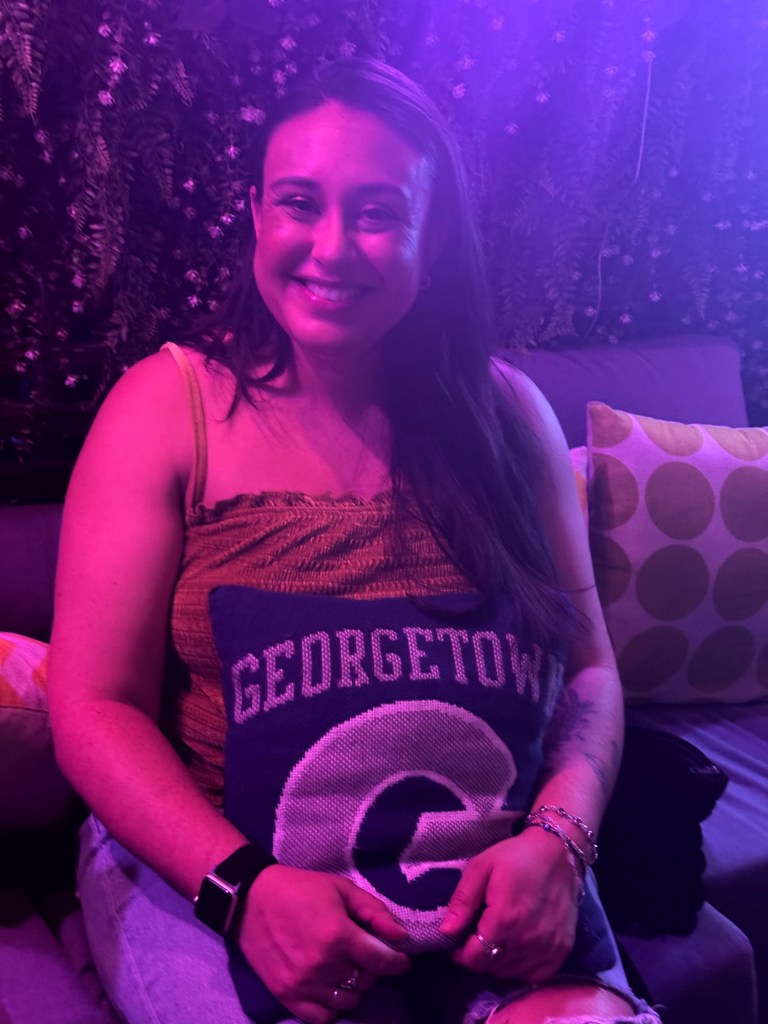
Here are a few photos from recent weeks fully soaking up the Hoya experience:



 JenTalksLoud
Leave a comment